
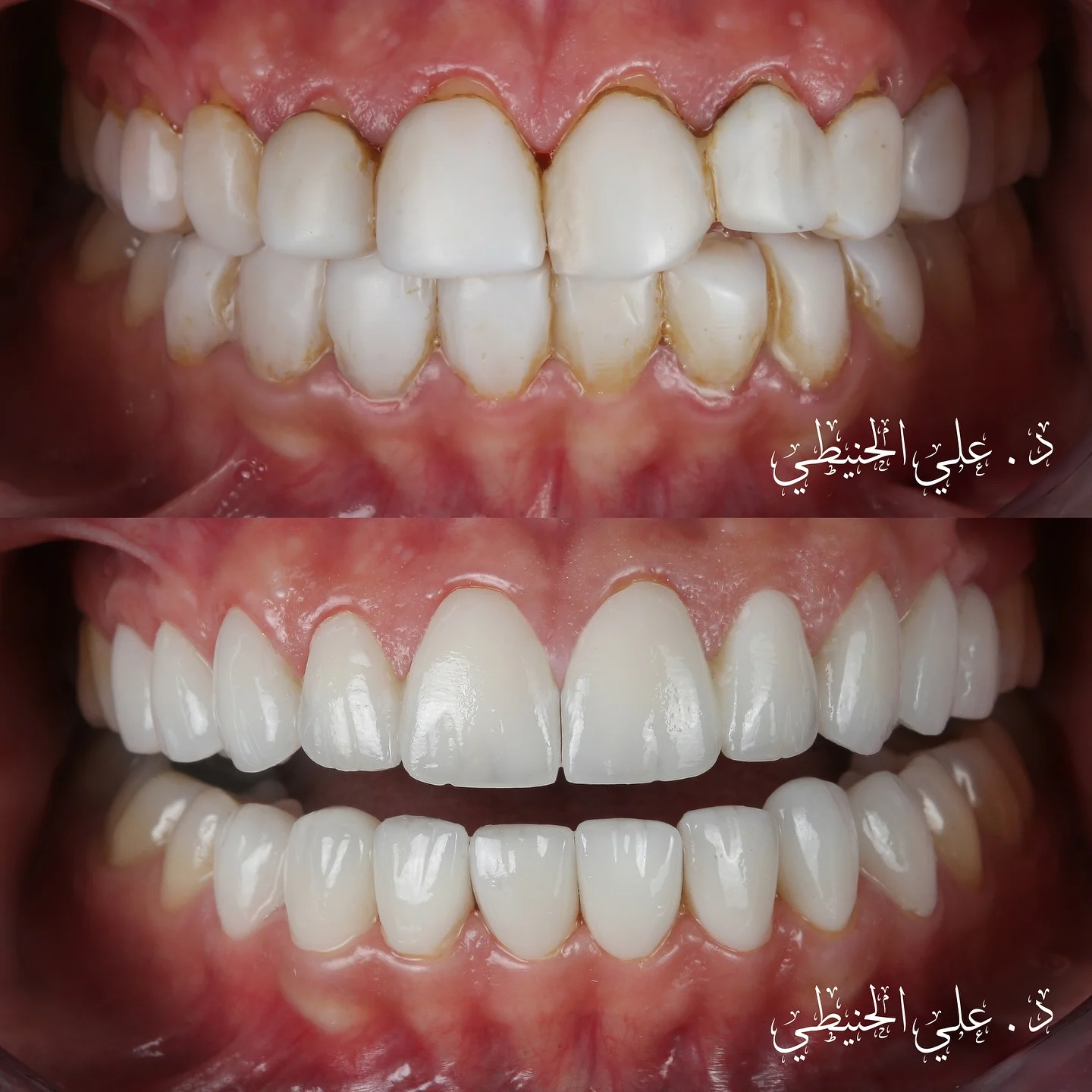
Dental veneers are often considered the signature treatment in cosmetic dentistry because they can transform color, shape, length, symmetry, and minor alignment at the same time. For patients who want a smile makeover without years of orthodontics or repeated whitening, veneers offer precision and visual control.
The best veneers are not the whitest or thickest veneers. They are carefully planned ceramic restorations that protect tooth structure, reflect light naturally, and support the lips and face. This guide compares veneers with common alternatives so you can choose with confidence.
Not sure which treatment fits your case? Share your smile photos privately on WhatsApp and our team will guide the next step.
WhatsApp UsThe Main Benefits of Veneers
Veneers can correct stubborn discoloration, small gaps, worn edges, uneven tooth length, old composite facing, mild rotations, and shape concerns. They provide a controlled final shade and surface texture that whitening or bonding cannot always deliver.
Because porcelain is color-stable and polishable, premium veneers can maintain their appearance with proper hygiene and professional follow-up. They are also conservative when planned on suitable teeth.
Veneers vs Whitening and Bonding
Whitening improves tooth color but does not change shape, length, texture, or alignment. It is ideal for healthy teeth with simple staining, but it may not work well for deep discoloration, old fillings, or enamel defects.
Composite bonding can be useful for small repairs and budget-conscious improvements. However, it stains faster, chips more easily, and often lacks the depth and light reflection of porcelain veneers. Veneers are usually stronger aesthetically for full smile makeovers.
Veneers vs Crowns and Orthodontics
Crowns are excellent when teeth are weak, broken, heavily filled, or need full coverage. But for healthy front teeth, veneers can achieve a major aesthetic change while preserving more tooth structure.
Orthodontics is best when the main issue is tooth position or bite. Veneers can visually improve mild alignment concerns, but they should not replace orthodontics when movement is clinically necessary for function or stability.
Composite Veneers, Zircon, and Emax
Composite veneers are shaped directly or indirectly using resin. They cost less initially and can be repaired, but they require more maintenance and usually do not match porcelain longevity or translucency.
Emax veneers are valued for natural translucency and refined beauty. Zircon can be selected when strength or masking is more important. A cosmetic dentist should explain why one material suits your teeth rather than presenting all materials as identical.
Longevity, Maintenance, and Ideal Candidates
Veneer longevity depends on bonding quality, bite forces, hygiene, material, tooth preparation, and habits such as nail biting or teeth grinding. Many patients need a night guard if they clench.
Ideal candidates have realistic expectations, healthy gums, enough enamel for bonding, and a desire for a refined but natural result. Maintenance includes brushing, flossing, professional cleaning, avoiding destructive habits, and attending reviews.
Frequently Asked Questions
Are veneers better than whitening?
For shape, length, texture, and deep discoloration, veneers are more comprehensive. For simple staining on healthy teeth, whitening may be enough.
Do veneers damage teeth?
Conservative veneers on suitable teeth can preserve structure. Over-preparation or poor planning creates risk, which is why diagnosis matters.
Can veneers look natural?
Yes. Natural veneers rely on proportion, texture, translucency, and shade selection rather than extreme whiteness.
Private Consultation
Thinking about a new smile?
Not sure which treatment fits your case? Share your smile photos privately on WhatsApp and our team will guide the next step.
Book Your ConsultationMedical Disclaimer
This article is for general education and does not replace a dental examination or personalized diagnosis. Results, timelines, and costs vary by individual case.